01POS: Infrastructure software helping African retailers manage operations and access capital.
Explore the Project: 01pos.net
01POS is everything you need to run your business. From sending invoices to managing sales, tracking inventory, receiving low-stock alerts, and getting AI-powered predictions that help you stay ahead.
Growth Snapshot
Gross Merchandise Volume in Q1 2026
System Architecture

What I Did
Project Management
Context: 70% of small businesses struggle with tracking inventory effectively, resulting in lost revenue and unhappy customers.
My Role: Led 01POS development with 3 engineers and 2 sales personnel.
Approach:
- Ran 47 user interviews across Nigeria, Ghana, and South Africa to understand business owner pain points.
- Shipped MVP in 6 months using simplified UX.
- Ran controlled rollout: 5% → 25% → 100% over 24 weeks.
Impact:
- Reduced stock losses by 34% for 100+ businesses (₦780K monthly savings).
- Increased business performance analysis speed from 1hour → 5min.
What I Learned: Every business is unique and simple solutions beat sophisticated ones. Our initial onboarding design required us to create user accounts. However, this approach made conversions difficult. To simplify the process, we introduced a sign-up page, reducing the required information to just two fields.
AI Engineer
Problem: 01POS needed an intelligent forecasting engine to help merchants predict next-week and next-month sales, and automatically detect low-stock risks with suggested reorder quantity.
Technical Challenge:
- Feature wasn’t planned initially; had to restructure data and build new endpoints.
- Cost of new VPS for machine learning was becoming a concern.
- Integrate a Python ML pipeline into an existing Laravel + React ecosystem without disruption.
Architecture:
- Data Layer: Pulls structured data from 01POS backend API:
- 60–90 days sales history
- Low stock data
- Product image, name, current stock, price, category
- Average daily sales (computed)
- Stock limit (merchant-defined)
- API Layer: Responsible for fetching datasets, packaging JSON payload, sending to ML model, and receiving forecast results (7-day & 30-day sales, stockout risk level).
- Model Layer (XGBoost): Generates weekly/monthly sales forecasts and computes low-stock risk using historical sales, stock limits, and product metadata.
- Prediction Engine: Cleans/transforms API data, generates model-ready features, runs inference, and outputs forecast numbers, risk scores, and recommendations.
- Frontend Integration: React dashboard displays:
- Next week/month sales forecast
- Low-stock alert list
- Product risk level indicators
- Restocking recommendations
Model Performance:
- Strong short-term accuracy (7-day).
- Robust on noisy data.
- Slightly weaker for low-frequency sales.
Head of Product
The Bet: Aligning marketing, sales, and product into a single continuous feedback loop would accelerate growth, reduce guesswork, and help us build exactly what customers need.
Execution: Sales and development teams shared the same communication channels, speaking with one unified voice. Every complaint became a signal to investigate, and every sale became product feedback that guided what we built next.
Results: We moved faster, responded to market needs with precision, and shipped improvements matching real customer behavior. Conversion improved because messaging, product updates, and sales insights were always in sync.
Trade-offs Made: Centralizing the loop required more coordination, tighter communication, and the discipline to adjust quickly. We prioritized features that directly moved the product forward, saying no to anything outside the feedback cycle.
What I’d Do Differently:
- Validate willingness-to-pay earlier — We built for 6 months before discussing pricing. Should’ve run pricing experiments at month 2 with mockups. Cost us 3 months repositioning.
- Start with one vertical — We tried to serve all retail businesses. Should’ve focused on pharmacies or grocery stores first, then expanded. Generic features meant slower adoption.
- Ship mobile app in month 3, not 1 year later — 100% of our merchants use mobile phones. We built desktop-first because traditional POS terminal were PC. Mobile app took 12 months to retrofit. Should’ve built responsive mobile web first, or gone mobile-native from the start. Cost us estimated 40 potential customers who couldnt afford a new terminal.
Founder Story & Product Journey: Watch the full 01POS story on YouTube
Traders Never Settle: Taking a founder's no-code build to 100+ users
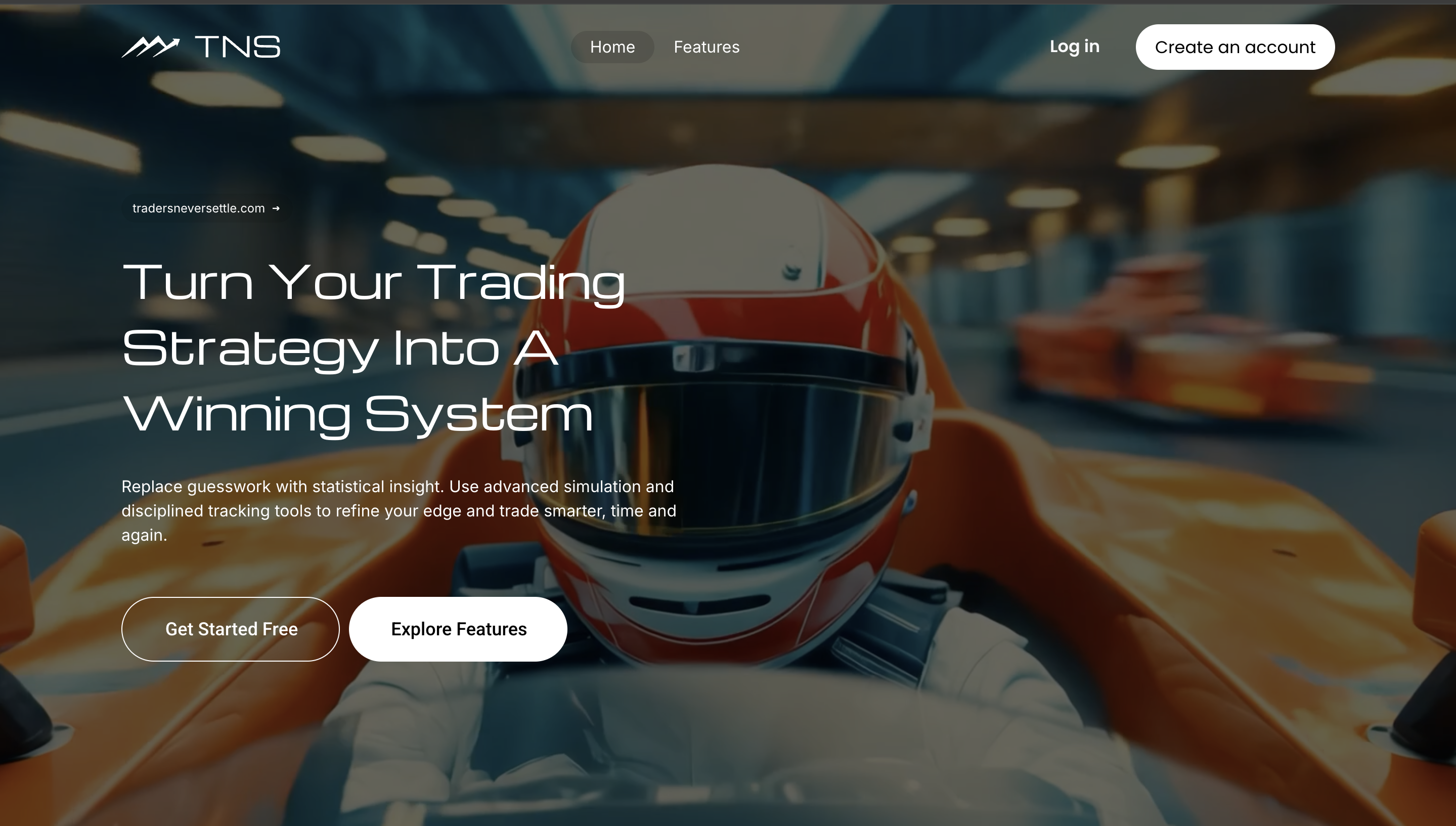
Explore the Project: tradersneversettle.com
My co-founder was an experienced forex trader who felt the industry lacked the right tools and believed he was the one to build them. He'd been using no-code AI dev tools to build solo, but without an engineering background, the product was falling short of basic software standards and, more critically, he didn't fully own his own infrastructure.
What I Did
Infrastructure & Security Lead
Context: My co-founder came in worried about the landing page. The audit found a deeper problem: no real security or privacy posture, and no ownership of the database or hosting the product ran on.
My Role: Led the technical turnaround end to end — infrastructure, retention systems, and content strategy.
Approach:
- Audited the existing build starting from the landing page, the first thing any user sees, to trace the real problem underneath.
- Migrated the entire codebase to new infrastructure the company actually owned: database, email, and hosting.
- Reconnected the AI dev tool my co-founder liked using to the new stack, so we kept our build speed without losing ownership.
Impact:
- Grew the product to 100+ users on infrastructure the company now fully owns.
What I Learned: The most urgent problem is rarely the one that gets named first. My co-founder came in worried about the landing page; the actual risk was that we didn't control our own infrastructure — the kind of gap that doesn't show up in a demo but can end a company. Fixing ownership before polish meant every improvement after that was one we could actually keep.
Retention & Growth Lead
Problem: An early-stage product with real acquisition potential but no system in place to keep the users it already had.
Approach:
- Built a full onboarding flow — welcome emails, timeline emails, session-triggered notifications — before pushing any growth spend, on the theory that early-stage products die from churn more than from lack of acquisition.
- Ran marketing and development concurrently rather than sequentially, shifting resourcing between 50/50 and 70/30 depending on signal, to keep validating demand instead of building in a vacuum.
Impact:
- Cut churn by 85% through the onboarding rebuild.
Content Systems Lead
Problem: Instagram and TikTok both weight video over stills, but the format that already had traction — short-form quote posts — was static.
Approach:
- Scaled the format that already had traction instead of inventing a new one.
- Built a tool that converts static images into short-form video using narrator characters, keeping the proven message format while shifting it into video.
Impact:
- Took content production to ~100 videos/hour, proving the format was automatable at scale.
- Reduced per-video production cost by roughly 90% versus talking-head video.
— DATA PROJECT —
Can a Lagosian Still Afford Bread?
In Nigeria, petrol isn’t just about transportation — it’s a signal. When it spikes, everything follows, especially the price of everyday essentials like bread. And when bread becomes unaffordable, it’s not just a cost issue — it’s a crisis of dignity.
This project explores how fuel price hikes ripple through to the cost of bread in Lagos. Because at some point, when the price of bread starts to feel like a luxury, you have to ask: “What else is quietly slipping out of reach?”
Methodology
Bread price data came from the World Bank Microdata Library:
🔗 World Bank Microdata
I wrote two Python scripts:
Final count: 65 valid bread price records.
Petrol prices were sourced from the National Bureau of Statistics:
🔗 National Bureau of Statistics
Insights That Hit Hard
- July 2021
Petrol: ₦164.08
Bread: ₦609.76
→ A brief stable period — bread prices even dropped to ₦427.50 while petrol stayed under ₦170. - February 2023
Petrol: ₦305.63
Bread: ₦300.00
→ Bread and fuel almost cost the same. That says a lot. - May 2024
Petrol: ₦636.80
Bread: ₦297.83
→ Petrol cost more than 2x a loaf of bread. A first. - April 2025
Petrol hit an all-time high: ₦880.00
Bread: ₦390.00
→ Bread was now less than half the cost of petrol.
📊 Live dashboard: www.casmir.tech/dataproject1.html
My Approach
- Built a fully responsive dashboard using HTML, CSS, JS, and Chart.js
- Hosted dynamic assets via jsDelivr.net for clean rendering
- Applied linear regression to forecast how rising petrol might shape bread pricing
If you can’t afford petrol, you walk.
If you can’t afford bread, you endure.
But when both become too expensive — survival itself becomes negotiation.